




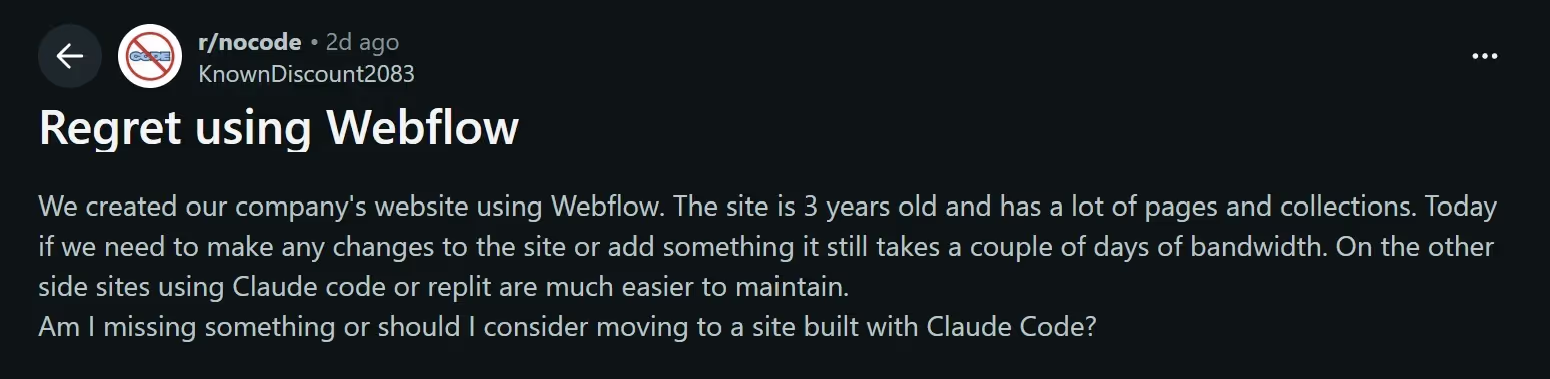
Hi, I'm Karina, founder of Rapid Fire — here with an honest opinion piece on the whole 'just leave Webflow' trend I keep seeing lately. This post is inspired by a Reddit thread recently where a business owner said they regretted building their company website on Webflow. They had a three-year-old site, dozens of pages, and every small change was eating up days of their team's time. Their conclusion: maybe it's time to rebuild everything with Claude Code or AI-generated website.
I get why that thread resonated with people. The frustration is real. But I think the conclusion a lot of people are jumping to is the wrong one.
So here is my honest take.
Vibe coding is not quite ready to run your business
I am not anti-AI. I use AI tools every day and I genuinely believe they are reshaping how web development works. But there is a difference between believing in the direction and betting your company's digital presence on where the technology is today.
At Rapid Fire, I regularly get requests to come in and clean up the aftermath of vibe-coded websites. Fragile codebases, no documentation, logic that nobody on the team can explain or maintain. The initial build looked fast and cheap. The long-term cost was neither.
If you are a small startup with limited budget and limited downside, experimenting with AI-generated code makes total sense. But if you are a growing business with real traffic, real customers, and a brand you have spent years building, the risk-reward calculation looks very different.
Webflow is not standing still
Here is something I think gets lost in these conversations: Webflow is actively moving toward AI-assisted development. It may look gradual right now, but the direction is clear. With tools like the Claude MCP bridge already available, a significant portion of Webflow work can be automated or managed through prompts today.
The platform is not going anywhere. It is evolving. And because it sits on top of a structured, visual layer, AI assistance in Webflow comes with guardrails that raw vibe coding simply does not have.
I would rather build on a platform that is integrating AI thoughtfully than hand everything over to a tool that generates code nobody can audit or maintain.
Your real problem might not be the platform
When someone tells me their Webflow site takes days to update, my first question is not "what platform should you switch to?" It is: why is it taking that long?
A well-structured Webflow site, maintained by someone who knows what they are doing, should not be that slow to update. If it is, the problem is usually one of two things: the site was not built with maintainability in mind, or the wrong person is maintaining it.
Either way, rebuilding on a new platform does not fix that. It just resets the clock.
What I actually see changing in the industry
The shift I notice with clients is not about platforms. It is about what they are hiring for. A few years ago, businesses came to agencies like Rapid Fire primarily for technical work: build this page, fix this bug, add this feature.
Increasingly, they are coming to us for strategy and direction. They want someone who understands their marketing goals, knows the tools well enough to execute efficiently, and can help them make good decisions about where to invest. The technical execution matters, but it is table stakes now.
If managing your website is pulling your team away from growing your business, that is a signal worth paying attention to. Not necessarily a signal to blow up your tech stack, but a signal to look at how that work is being handled and whether the right people are handling it.
The bottom line
Webflow is a mature, capable platform and it is getting smarter. AI-generated websites are promising and I am watching that space closely. But promising is not the same as proven, and your business deserves proven.
Do not retire a tool that works just because something shinier showed up on Reddit.